Biometric Bias
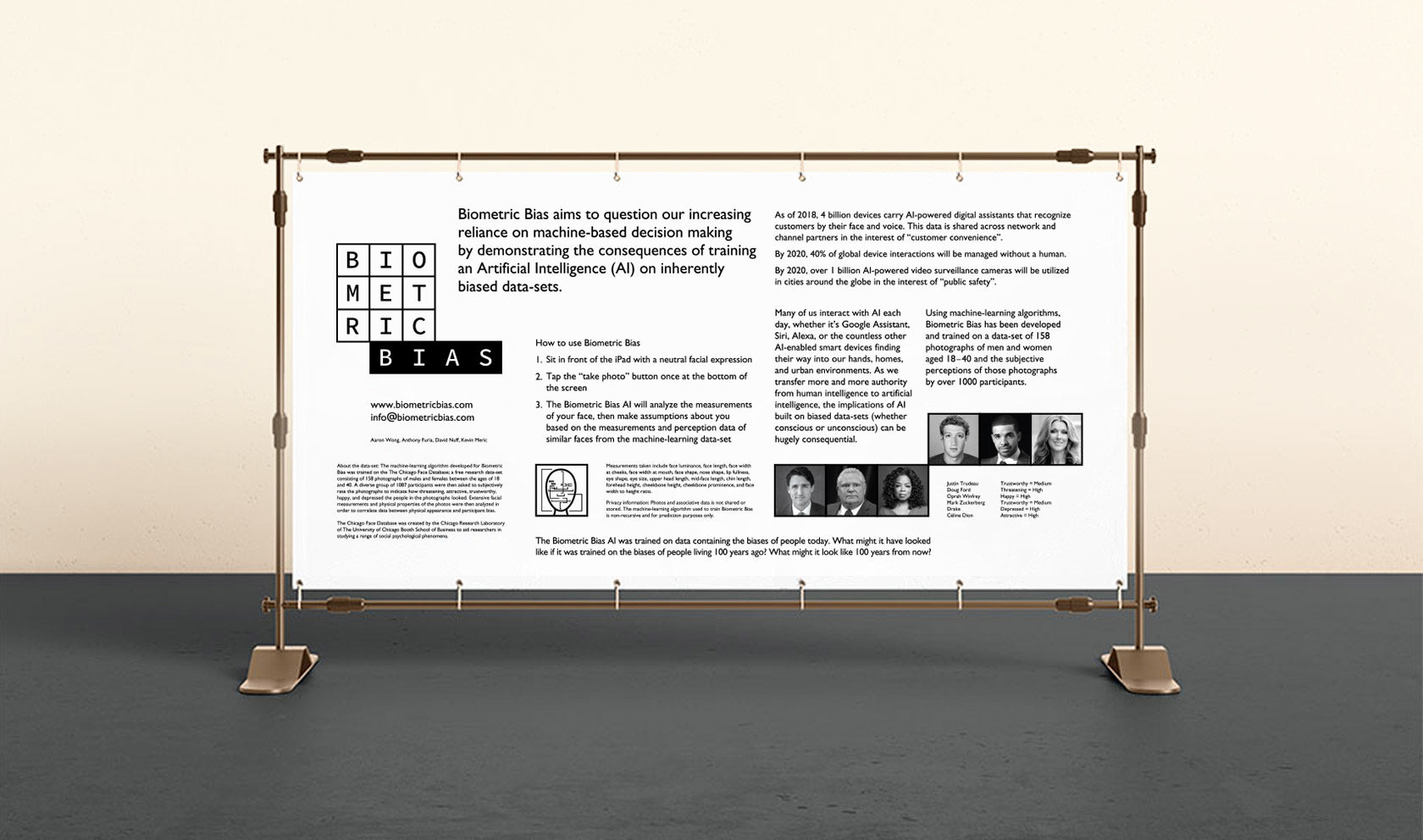
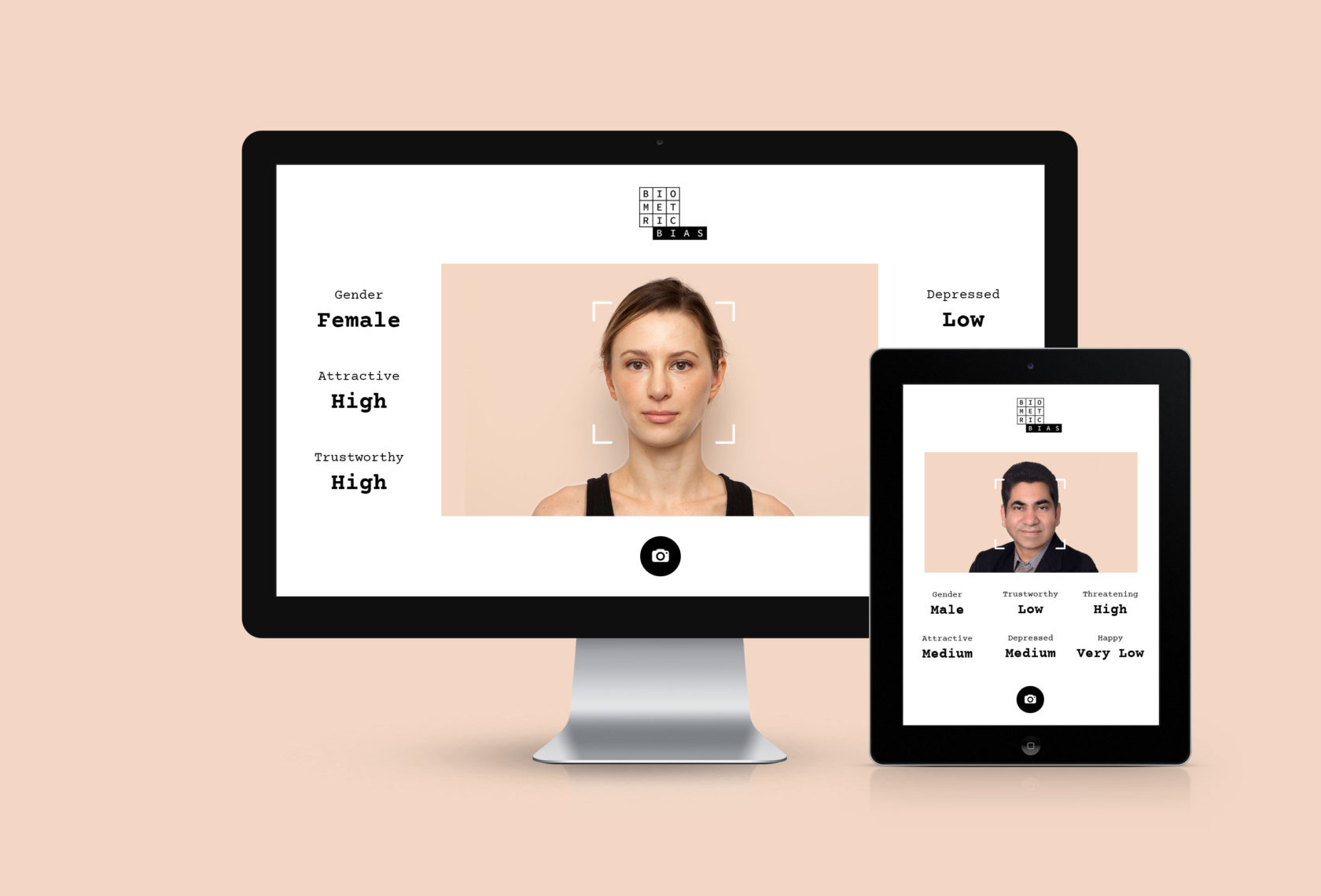
Biometric Bias is an Artificial Intelligence (AI) project that questions our increasing reliance on machine-based decision making by demonstrating the consequences of AI when trained on inherently biased data.
- Date
- February 2019
- Role
- AI Architect & ML Engineer
- Tags
- Deep Learning, Machine Learning, Website, Computer Vision, Event Signage
Biometric Bias is an Artificial Intelligence (AI) project that questions our increasing reliance on machine-based decision making by demonstrating the consequences of AI when trained on inherently biased data.
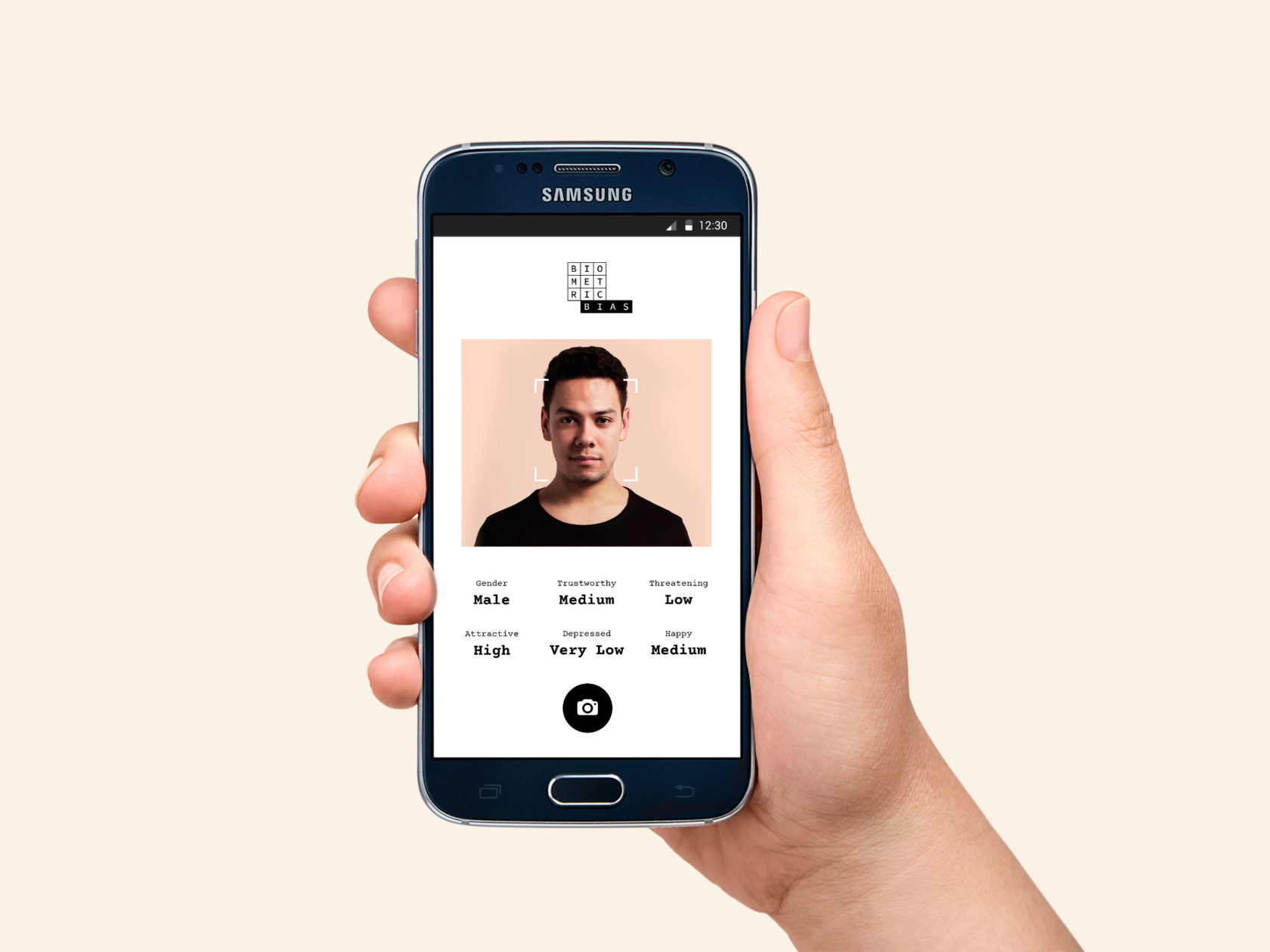
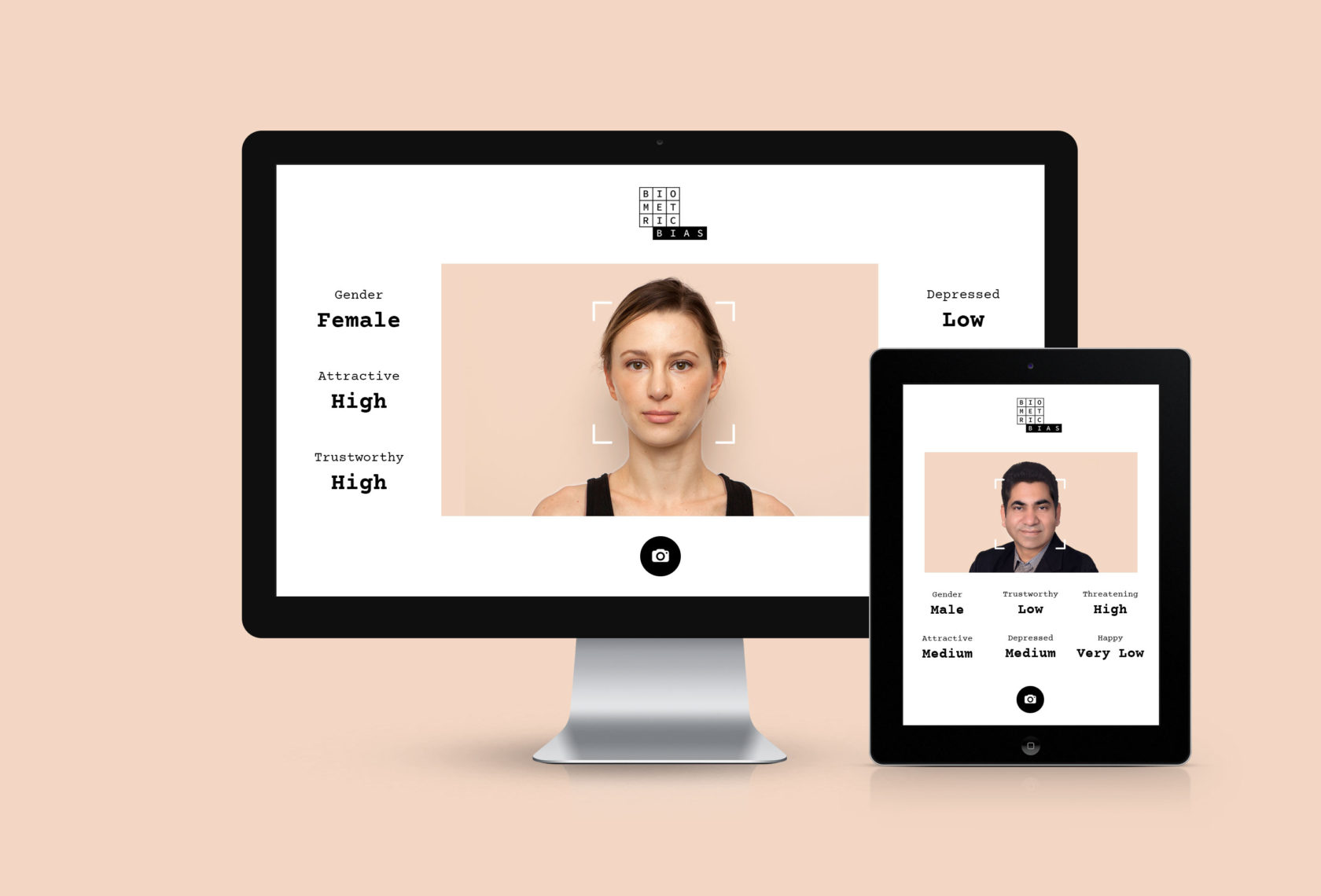
Developed for the Ontario Science Centre’s annual Tech Art Fair, Aaron and a team of three other creative industry professionals developed and trained an AI on The Chicago Face Database — a research study data-set consisting of hundreds of photographs of peoples faces that had been subjectively rated by over one thousand participants who took part in the study (ratings included how threatening, attractive, trustworthy, happy, and depressed the people in the photographs looked). The Biometric Bias AI first analyzed extensive facial measurements and physical properties of the photos, then correlated this data with the ratings of the biases of the participant study. A web application was then developed so that attendees of the Tech Art Fair could interact with Biometric Bias by standing in front of a digital screen and have their facial data analyzed through a webcam in order for the AI to make assumptions about them based on the ratings of similar faces from the data-set.
Over 15,000 people interacted with Biometric Bias over the course of the three-day event, provoking much thought and discussion concerning the implications of AI built on biased data-sets (whether conscious or unconscious) as we transfer more and more authority from human intelligence to artificial intelligence.
Technologies Used
Keras, Tensorflow, Pandas and PlaidML are used for constructing the deep learning model in python. TensorflowJS, WebGL and canvas are used to build the front end processing engine in vanilla Javascript.
Privacy
By design, all model predictions and data is handled on the client side application. All processing is handled within the browser and no data is sent over the internet to a server, to ensure full privacy.
Demo Disclaimer
This project is designed as an art piece and is not optimized for production. Thus this demo is best supported on chrome desktop browsers and not mobile phones. For best performance please use google chrome and on load wait few seconds for the camera to start.
Project Credits
- Creative Direction: Anthony Furia, Aaron Wong-Ellis, David Nuff, Kevin Meric
- Project Lead / AI Architect / ML Model Development / Front-end Web Development: Aaron Wong-Ellis
- Front-end Web Development / UI Design: Anthony Furia
- Graphic Design: Anthony Furia, David Nuff
- Project Coordinator / Installation Design & Production: Kevin Meric
Gallery